
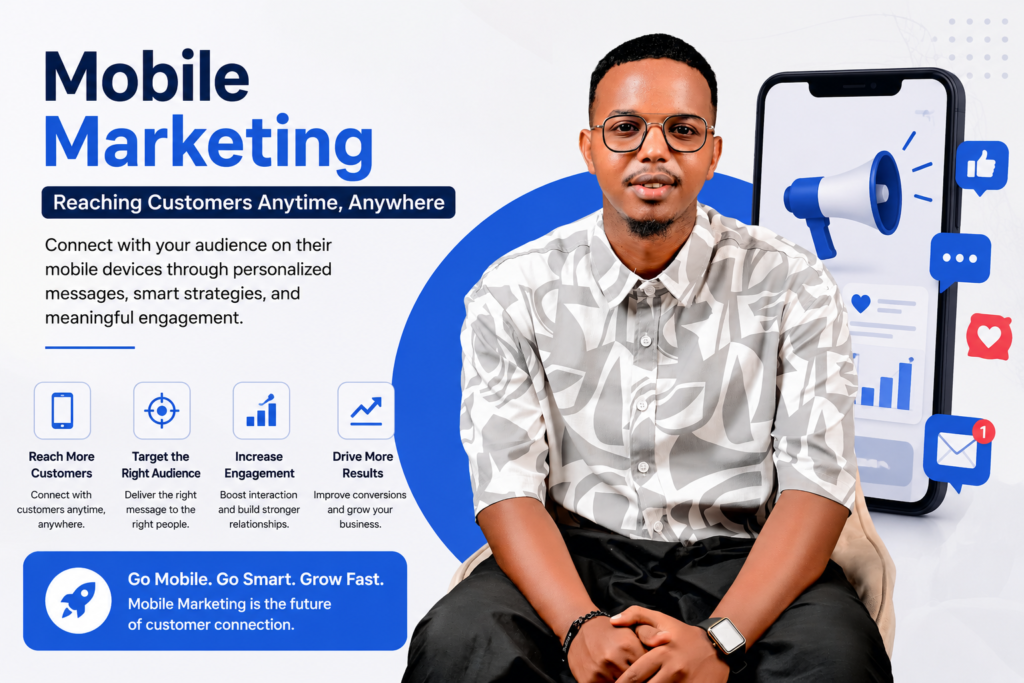
Reaching Customers Anytime, Anywhere
In today’s digital world, smartphones have become an essential part of everyday life. People use their mobile devices to browse the internet, shop online, communicate, and consume content. As a result, Mobile Marketing has become one of the most effective ways for businesses to connect with customers anytime and anywhere.
By leveraging mobile technology, businesses can deliver personalized messages, promote products, and engage audiences directly through their smartphones and tablets.
What Is Mobile Marketing?
Mobile Marketing is a digital marketing strategy that focuses on reaching customers through mobile devices such as smartphones and tablets. It involves using mobile-friendly websites, apps, SMS messages, social media platforms, and mobile advertisements to communicate with potential and existing customers.
The goal of Mobile Marketing is to provide relevant and timely information that encourages customer engagement and drives business growth.
Why Mobile Marketing Matters
The number of mobile internet users continues to grow worldwide. Consumers increasingly rely on their smartphones for shopping, entertainment, and information. This shift in behavior makes Mobile Marketing a critical part of any modern marketing strategy.
Key benefits include:
- Wider audience reach
- Increased customer engagement
- Higher conversion rates
- Improved customer experience
- Better brand visibility
Businesses that invest in Mobile Marketing can stay connected with customers wherever they are.
Key Mobile Marketing Strategies
1. Mobile-Friendly Websites
A mobile-friendly website ensures visitors can easily browse content on smaller screens. Fast loading times, responsive design, and easy navigation improve the user experience and help retain customers.
Benefits include:
- Better user satisfaction
- Lower bounce rates
- Improved search engine rankings
- Increased conversions
A responsive website is the foundation of successful Mobile Marketing.
2. SMS Marketing
SMS marketing allows businesses to send promotional messages, updates, and special offers directly to customers’ phones.
Advantages include:
- High open rates
- Instant delivery
- Direct communication
- Cost-effective marketing
When used responsibly, SMS campaigns can generate strong customer engagement.
3. Mobile Apps
Many businesses use mobile applications to provide personalized experiences and build customer loyalty. Apps can offer exclusive content, rewards programs, and convenient shopping experiences.
Benefits of mobile apps include:
- Increased customer retention
- Better user engagement
- Personalized recommendations
- Improved brand loyalty
Mobile apps create long-term relationships between businesses and customers.
4. Social Media Marketing
Most social media users access platforms through mobile devices. Businesses can use social media marketing to reach audiences through engaging content, advertisements, and interactive campaigns.
Popular platforms include:
- TikTok
- X (formerly Twitter)
Social media remains one of the most powerful Mobile Marketing channels available today.
5. Location-Based Marketing
Location-based marketing uses GPS technology to deliver targeted promotions based on a customer’s location.
Examples include:
- Local store promotions
- Nearby restaurant offers
- Event notifications
- Personalized discounts
This strategy helps businesses deliver highly relevant messages to potential customers.
Benefits of Mobile Marketing
Increased Customer Reach
Since most people carry smartphones throughout the day, Mobile Marketing allows businesses to reach customers at almost any time.
Better Personalization
Businesses can use customer data to deliver personalized offers, recommendations, and content that match individual interests.
Higher Engagement Rates
Mobile users are more likely to interact with notifications, messages, and social media content, leading to higher engagement levels.
Improved Conversion Rates
Targeted mobile campaigns often generate better conversion rates because they reach customers at the right time with relevant information.
Challenges of Mobile Marketing
While Mobile Marketing offers many benefits, businesses should also consider potential challenges:
- Privacy concerns
- Ad fatigue
- Device compatibility issues
- Small screen limitations
- Increasing competition
To overcome these challenges, businesses should focus on providing valuable and relevant content while respecting user privacy.
The Future of Mobile Marketing
The future of Mobile Marketing is expected to be driven by emerging technologies such as Artificial Intelligence (AI), 5G networks, voice search, and augmented reality (AR).
Future trends may include:
- AI-powered personalization
- Advanced mobile advertising
- Voice search optimization
- Interactive shopping experiences
- Enhanced mobile customer service
As technology evolves, Mobile Marketing will continue to play a central role in how businesses connect with their audiences.
Morehttps://en.wikipedia.org/wiki/Digital_marketing
Conclusion
Mobile Marketing has transformed the way businesses reach and engage customers. By using mobile-friendly websites, apps, SMS campaigns, social media, and location-based strategies, companies can communicate with their audience anytime and anywhere.
As mobile device usage continues to grow, businesses that invest in effective Mobile Marketing strategies will be better positioned to increase brand awareness, improve customer relationships, and drive long-term success.