
Introduction
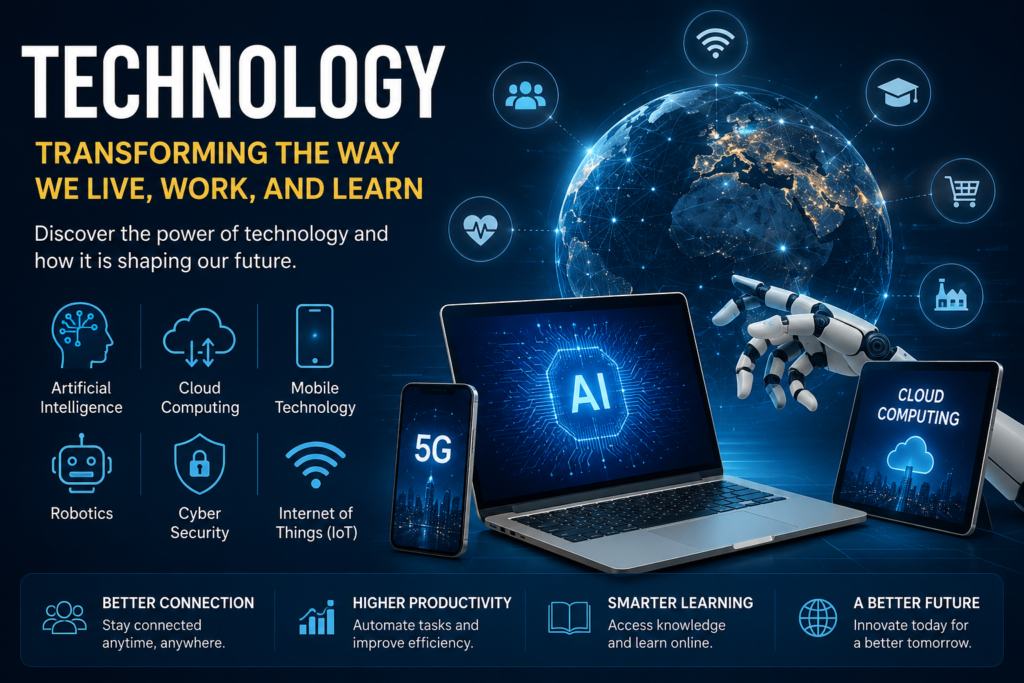
Technology has become an essential part of modern life. From smartphones and computers to artificial intelligence and cloud computing, technology influences almost every aspect of how we communicate, work, learn, and conduct business.
Over the past few decades, technological advancements have transformed industries, improved productivity, and created new opportunities for individuals and organizations worldwide. Today, businesses rely on technology to streamline operations, while individuals use it to stay connected, access information, and develop new skills.
In this article, we will explore what technology is, its importance, major types of technology, benefits, challenges, and future trends that are shaping our digital world.
What Is Technology?
Technology refers to the application of scientific knowledge, tools, systems, and techniques to solve problems and improve human life. It includes both physical devices and digital systems that help people perform tasks more efficiently.
Examples of technology include:
-
- Smartphones
-
- Computers
-
- Internet services
-
- Artificial Intelligence (AI)
-
- Cloud Computing
-
- Robotics
-
- Software Applications
-
- Smart Home Devices
Technology continues to evolve, bringing new innovations that make daily activities easier and more productive.
Why Is Technology Important?
Technology plays a critical role in modern society. It helps individuals, businesses, governments, and educational institutions achieve their goals more effectively.
Improved Communication
Technology has made communication faster and easier than ever before. Through email, messaging apps, video conferencing, and social media, people can connect instantly from anywhere in the world.
Increased Productivity
Businesses use technology to automate tasks, manage data, and improve workflow efficiency. This saves time and reduces operational costs.
Better Access to Information
The internet provides instant access to vast amounts of information, making learning and research more convenient.
Enhanced Education
Technology has transformed education through online courses, digital classrooms, and interactive learning platforms.
Economic Growth
Innovation and technological development create new industries, jobs, and business opportunities that contribute to economic growth.
Major Types of Technology
Information Technology (IT)
Information Technology involves the use of computers, software, and networks to manage and process information.
Examples include:
-
- Computer systems
-
- Databases
-
- Software applications
-
- Business networks
IT is essential for modern businesses and organizations.
Read : Technology
Artificial Intelligence (AI)
Artificial Intelligence enables machines to perform tasks that normally require human intelligence.
Examples include:
-
- ChatGPT
-
- Virtual assistants
-
- Recommendation systems
-
- Image recognition software
AI is revolutionizing industries by improving efficiency and decision-making.
Cloud Computing
Cloud computing allows users to store and access data over the internet instead of relying on local devices.
Benefits include:
-
- Remote access
-
- Data backup
-
- Scalability
-
- Reduced infrastructure costs
Popular cloud platforms include Google Cloud, Microsoft Azure, and Amazon Web Services.
Mobile Technology
Mobile technology includes smartphones, tablets, and mobile applications that enable communication and productivity on the go.
Mobile devices have become essential tools for both personal and professional use.
Robotics
Robotics combines engineering and technology to create machines capable of performing automated tasks.
Robots are commonly used in:
-
- Manufacturing
-
- Healthcare
-
- Logistics
-
- Agriculture
Automation helps improve efficiency and reduce human error.
Technology in Business
Modern businesses rely heavily on technology to remain competitive.
Benefits for Businesses
-
- Improved customer service
-
- Faster communication
-
- Better data management
-
- Increased efficiency
-
- Enhanced security
-
- Global market reach
Technology enables businesses to operate more effectively and adapt to changing market conditions.
Technology in Education
Technology has transformed the way students learn and teachers teach.
Educational Technologies
-
- Online learning platforms
-
- Virtual classrooms
-
- Educational apps
-
- Digital textbooks
-
- Learning management systems
Students can now access quality education from anywhere with an internet connection.
Technology and Digital Skills
As technology continues to evolve, digital skills have become increasingly important.
Some of the most valuable digital skills include:
-
- Computer literacy
-
- Digital marketing
-
- Graphic design
-
- Web development
-
- Data analysis
-
- Cybersecurity
-
- Artificial Intelligence
Learning these skills can improve career opportunities and increase earning potential.
Challenges of Technology
Despite its many benefits, technology also presents challenges.
Cybersecurity Risks
Businesses and individuals face threats such as hacking, phishing, and data breaches.
Privacy Concerns
The collection and storage of personal data raise important privacy issues.
Digital Divide
Not everyone has equal access to technology and internet services.
Dependence on Technology
Excessive reliance on technology can create challenges when systems fail or experience disruptions.
Understanding these challenges helps individuals and organizations use technology responsibly.
Future Trends in Technology
Technology continues to advance rapidly. Several emerging trends are expected to shape the future.
Artificial Intelligence
AI will continue to automate tasks and improve decision-making across industries.
Internet of Things (IoT)
Connected devices will become more common in homes, businesses, and cities.
Blockchain Technology
Blockchain will improve security, transparency, and digital transactions.
Virtual Reality (VR) and Augmented Reality (AR)
Immersive technologies will transform education, entertainment, and business operations.
5G Connectivity
Faster internet speeds will support advanced applications and improved communication.
These innovations will create new opportunities and reshape industries worldwide.
Conclusion
Technology has transformed the way people live, work, communicate, and learn. From artificial intelligence and cloud computing to mobile devices and online education, technology continues to drive innovation and improve efficiency.
As the digital world evolves, understanding technology and developing digital skills will become increasingly important. Individuals and businesses that embrace technological advancements will be better positioned for success in the future.
Whether you are a student, entrepreneur, or professional, investing time in learning about technology can open doors to new opportunities and help you thrive in an increasingly digital world.